
Bed Bug Inspection and Treatment Planning in New Jersey
Bed bug service starts with confirming evidence and mapping affected rooms. The treatment plan may combine physical methods, monitoring, encasements, and targeted pesticide applications based on the inspection and contracted scope.
Fast quote request
Your pest protection
- Choose your pest issue
- Add your contact information
- We confirm property details during follow-up
Physical evidence matters more than bites alone
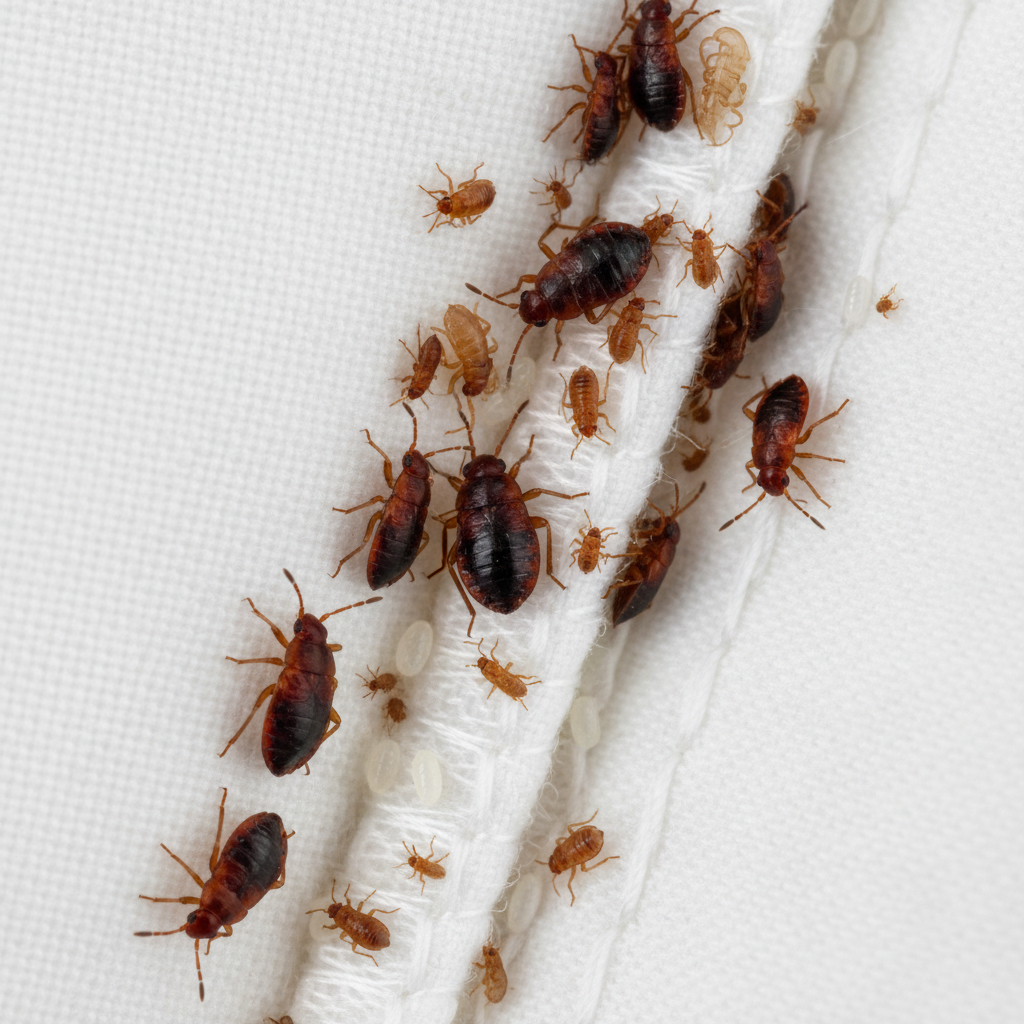
Bed bugs are flat, wingless insects that feed on blood and hide close to resting people. Skin reactions vary widely and cannot confirm an infestation by themselves. Reliable identification uses live insects, eggs, cast skins, dark spotting, and the pattern of harborages around beds, upholstered furniture, and nearby cracks.
Typical hiding distance
Close to beds, furniture, and regular resting areas
Useful evidence
Live bugs, eggs, cast skins, spotting, and monitor captures
Common movement
Luggage, furniture, belongings, shared walls, and human activity
Control principle
Confirm, map, prepare, treat, monitor, and follow up
How to identify it
- Adults are reddish-brown, oval, and flattened when unfed; recently fed bugs appear fuller and darker.
- Nymphs are smaller and lighter, while eggs are tiny, pale, and attached in protected cracks.
- Dark fecal spotting may appear along mattress seams, bed frames, headboards, and nearby harborages.
- Carpet beetle larvae, fleas, ticks, lint, and other insects are frequently mistaken for bed bugs.
Behavior and life cycle
- Bed bugs hide in narrow cracks and usually emerge when a host is resting.
- They can spread when belongings are moved from an affected room to an unaffected room.
- They do not require dirty conditions, although clutter creates more hiding places and complicates treatment.
- Eggs, inaccessible harborages, adjoining units, and untreated belongings can require multiple inspections or treatments.
Why it shows up
- Travel, overnight guests, shared housing, dormitories, hotels, and public seating can introduce bugs.
- Used furniture, mattresses, clothing, and personal belongings may carry hidden insects or eggs.
- Movement through shared walls, utility openings, hallways, and laundry areas can affect multi-unit buildings.
- Moving infested items through a property can create new areas of activity.
Common mistakes
- Diagnosing from bites alone without obtaining physical evidence.
- Using total-release foggers or repeatedly spraying sleeping surfaces with unapproved products.
- Moving furniture and belongings into unaffected rooms before inspection.
- Throwing away furniture without wrapping, marking, or following a coordinated disposal plan.
When to call a professional
- A live bug, egg, cast skin, spotting, or monitor capture is found.
- The issue involves an apartment, hotel, group housing, office, or multiple rooms.
- Household attempts have spread activity or failed to stop evidence.
- A written preparation, treatment, and follow-up plan is needed.
What Fantwin inspects and services
Pests and problems covered
- Bed bugs
- Bed bug eggs and nymphs within the selected treatment strategy
Property types
- Homes
- Apartments
- Hotels
- Dormitory-style housing
- Offices with confirmed introductions
Areas we inspect
- Mattress and box-spring seams
- Bed frames, headboards, and nightstands
- Upholstered furniture and baseboards
- Adjacent rooms, luggage, and shared-wall pathways when indicated
What the service may include
- Inspection of beds, upholstered furniture, and likely harborages
- Evidence confirmation and room mapping
- Written preparation instructions
- A treatment plan based on room count, infestation level, and access
- Follow-up inspection or monitoring when included
Methods considered after inspection
- Vacuuming or physical removal
- Steam or heat methods when included and appropriate
- Mattress and box-spring encasements
- Interceptors and monitoring
- Targeted dust or liquid application
- Coordinated multi-visit treatment
Methods are selected from inspection findings, the contracted scope, treatment site, active license category, customer authorization, and product-label directions. Not every listed method is used on every job.
Health, property, and operational concerns
- Skin reactions and sleep disruption
- Spread through furniture, luggage, and shared walls
- Costly repeated treatment when preparation is incomplete
- Misidentification of bites without physical evidence
Signs to document before the visit
- Live bugs or cast skins
- Dark spotting along mattress seams
- Eggs in protected crevices
- Repeated bites combined with physical evidence
Why this problem develops locally
Frequent travel, apartments, shared laundry, secondhand furniture, and dense housing make introductions and movement between rooms or units possible throughout New Jersey.
Timing and follow-up
Inspection and treatment may be scheduled separately. Preparation, room count, clutter, building type, and chosen method affect appointment length and the number of visits.
Follow-up is commonly needed because hidden bugs, eggs, untreated belongings, neighboring units, and incomplete preparation can affect results.
Our service process
Confirm evidence rather than relying on bites alone
Map affected rooms and belongings
Issue preparation instructions and select methods
Perform the contracted treatment
Inspect, monitor, and determine whether additional service is needed
Before the appointment
- Tell us about occupants, pets, sensitivities, access limits, and any recent pesticide use.
- Keep the treatment area reasonably accessible so the technician can inspect before recommending service.
- Follow only the preparation instructions provided for your confirmed service; requirements vary by pest and treatment method.
After the appointment
- Review the digital service report, including products used, treated areas, and technician recommendations.
- Follow any product-specific precaution, ventilation, drying, or re-entry instructions provided after service.
- Complete sanitation, moisture, exclusion, or monitoring actions noted in the report because treatment alone may not correct the source.
Normally included when listed in the quote
- Inspection of contracted rooms
- Written preparation plan
- Authorized treatment methods
- Treatment documentation and follow-up recommendations
May require a separate quote or specialist
- Laundry and moving services
- Disposal of furniture
- Treatment of unlisted rooms or neighboring units
- Hotel or relocation costs
- Whole-structure heat unless specifically quoted
Important service expectations
Results depend on pest species, infestation level, access, sanitation, moisture, structural conditions, customer preparation, and completion of recommended follow-up.
No treatment can prevent every future pest from entering an open or conducive property.
Pesticides, when used, are selected for the inspected site and applied according to the product label.
Prevention and preparation tips
Do not move belongings into unaffected rooms
Avoid total-release foggers
Save a specimen or clear photo when possible
Follow preparation instructions exactly
Use encasements and interceptors only as directed