
Cockroach Inspection and Control in New Jersey
Cockroach programs are tailored to the species, population level, building type, food and moisture conditions, and whether activity is isolated or moving between units.
Fast quote request
Your pest protection
- Choose your pest issue
- Add your contact information
- We confirm property details during follow-up
Species, harborages, and sanitation determine the program
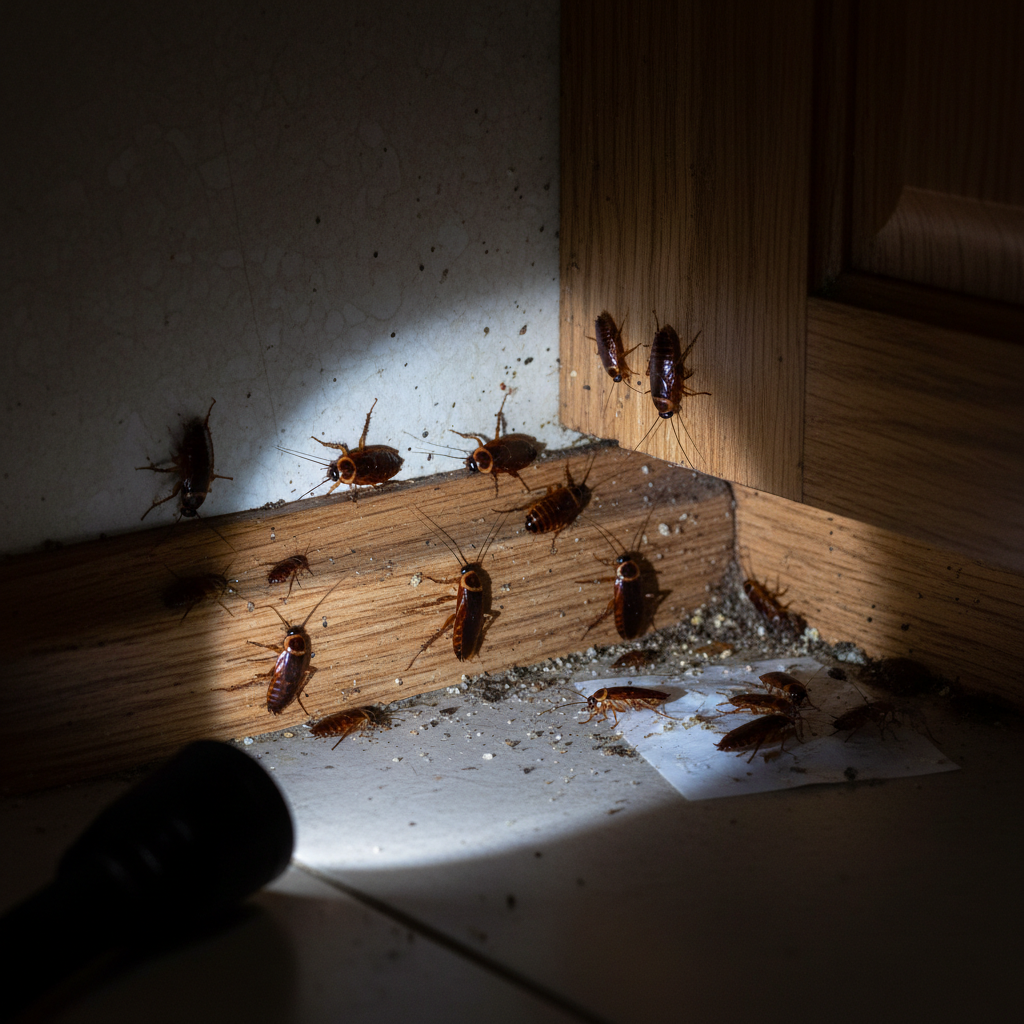
Cockroaches are nocturnal insects that shelter in tight cracks near food, water, and warmth. Different species prefer different environments. German cockroaches commonly develop indoors near kitchens and appliances, while American and Oriental cockroaches are more often linked to drains, basements, utility areas, and exterior sources.
Body shape
Flattened oval body with long antennae
High-risk areas
Warm appliances, plumbing, cabinets, drains, and clutter
Useful evidence
Droppings, egg cases, cast skins, odor, and monitor captures
Typical program
Inspection, baiting, monitoring, sanitation, and repeat evaluation
How to identify it
- German cockroaches are small and tan with two dark parallel stripes behind the head.
- American cockroaches are much larger and reddish-brown and are often associated with sewers and utility spaces.
- Oriental cockroaches are dark, heavy-bodied, and commonly found in damp basements, drains, and ground-level areas.
- Brown-banded cockroaches may occupy warmer, drier, and higher locations such as furniture, electronics, and upper cabinets.
Behavior and life cycle
- They shelter in narrow spaces where their bodies contact surfaces above and below.
- Populations can spread through plumbing lines, shared walls, deliveries, cardboard, appliances, and stored goods.
- Daytime sightings may indicate heavy activity, disturbance, or competition for harborages.
- Egg cases and hidden nymphs can make one-visit control unrealistic, especially in multi-unit buildings.
Why it shows up
- Grease, crumbs, food residue, pet food, trash, and unwashed containers.
- Leaks, standing water, wet mops, condensation, drains, and plumbing penetrations.
- Cardboard, paper bags, clutter, unused equipment, and tight appliance spaces.
- Movement from adjoining units, deliveries, secondhand appliances, or infested stored items.
Common mistakes
- Using foggers or repellent sprays that can scatter activity and contaminate bait placements.
- Cleaning only visible surfaces while grease and food remain beneath or behind appliances.
- Treating one apartment without coordinating access to affected adjoining units.
- Stopping service as soon as sightings decline without checking monitors and hidden harborages.
When to call a professional
- German cockroaches, egg cases, nymphs, or daytime activity are present.
- The problem involves a restaurant, commercial kitchen, apartment building, or childcare setting.
- Household sprays have not worked or sightings spread to new rooms.
- An occupant has asthma, allergy concerns, chemical sensitivity, or another condition requiring careful planning.
What Fantwin inspects and services
Pests and problems covered
- German cockroaches
- American cockroaches
- Oriental cockroaches
- Brown-banded cockroaches
Property types
- Homes
- Apartments
- Restaurants
- Commercial kitchens
- Offices and retail
Areas we inspect
- Behind and beneath appliances
- Cabinet hinges and wall void access points
- Plumbing penetrations and drains
- Trash, storage, break rooms, and shared-wall routes
What the service may include
- Inspection of harborages, plumbing lines, appliances, and food areas
- Species and severity assessment
- Monitoring-device placement when appropriate
- Targeted bait, dust, IGR, or crack-and-crevice treatment based on the site
- Preparation, sanitation, and follow-up instructions
Methods considered after inspection
- Gel bait
- Insect growth regulator
- Dust in suitable voids
- Targeted crack-and-crevice application
- Monitoring traps
- Vacuuming and sanitation recommendations
Methods are selected from inspection findings, the contracted scope, treatment site, active license category, customer authorization, and product-label directions. Not every listed method is used on every job.
Health, property, and operational concerns
- Food and surface contamination
- Allergen accumulation
- Rapid reproduction in warm harborages
- Spread through shared walls, deliveries, and stored goods
Signs to document before the visit
- Pepper-like droppings
- Egg cases or shed skins
- Activity behind appliances or near plumbing
- Musty odor or daytime sightings during heavier activity
Why this problem develops locally
Dense housing, shared plumbing, restaurants, deliveries, warm appliance motors, and humid basements make cockroach movement and reinfestation a recurring concern in many New Jersey buildings.
Timing and follow-up
Cockroach control commonly requires more than one visit because hidden populations, egg cases, shared-wall movement, and sanitation conditions can affect progress.
Follow-up timing is based on species, severity, monitoring results, and customer preparation. Multi-unit and food-service locations usually require coordinated ongoing service.
Our service process
Interview the customer and inspect likely harborages
Identify species and estimate activity level
Set monitoring and choose targeted methods
Treat cracks, crevices, bait placements, or approved voids
Review monitoring results and sanitation progress at follow-up
Before the appointment
- Tell us about occupants, pets, sensitivities, access limits, and any recent pesticide use.
- Keep the treatment area reasonably accessible so the technician can inspect before recommending service.
- Follow only the preparation instructions provided for your confirmed service; requirements vary by pest and treatment method.
After the appointment
- Review the digital service report, including products used, treated areas, and technician recommendations.
- Follow any product-specific precaution, ventilation, drying, or re-entry instructions provided after service.
- Complete sanitation, moisture, exclusion, or monitoring actions noted in the report because treatment alone may not correct the source.
Normally included when listed in the quote
- Inspection of accessible activity areas
- Initial targeted treatment
- Monitoring and sanitation guidance
- Service report
May require a separate quote or specialist
- Deep cleaning
- Appliance removal or repair
- Treatment of unapproved neighboring units
- Structural plumbing or moisture repair
Important service expectations
Results depend on pest species, infestation level, access, sanitation, moisture, structural conditions, customer preparation, and completion of recommended follow-up.
No treatment can prevent every future pest from entering an open or conducive property.
Pesticides, when used, are selected for the inspected site and applied according to the product label.
Prevention and preparation tips
Do not use over-the-counter sprays around professional bait
Remove grease and food residue nightly
Repair leaks and dry sink areas
Reduce cardboard and clutter
Coordinate access to affected neighboring units in multi-unit buildings