
Ant Inspection and Control in New Jersey
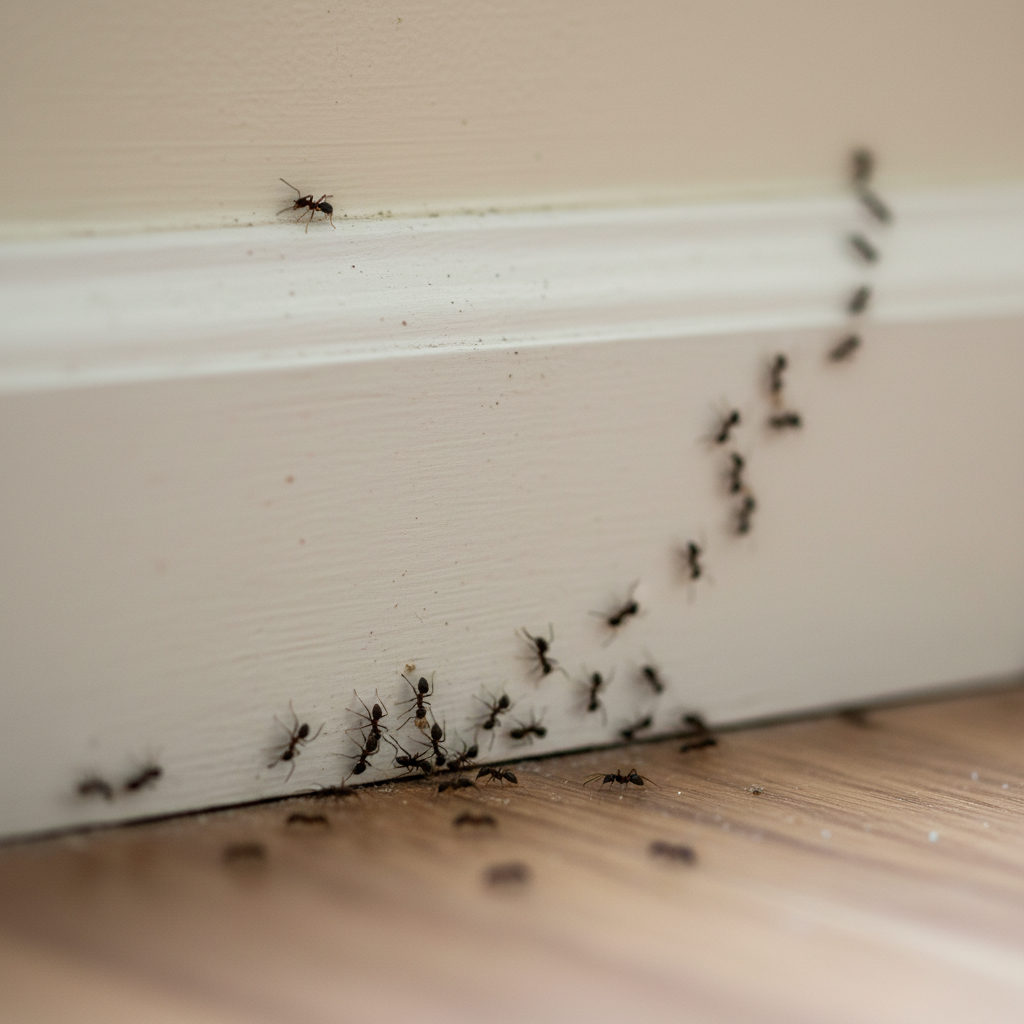
Ant treatment begins with determining where ants are traveling, what may be attracting them, and whether the activity suggests pavement ants, odorous house ants, carpenter ants, or another species.
Fast quote request
Your pest protection
- Choose your pest issue
- Add your contact information
- We confirm property details during follow-up
The ant species changes the control plan
Ants live in organized colonies with workers, queens, and developing brood. The ants visible on a counter may represent only a small part of the colony. Species identification matters because nest location, food preference, moisture needs, and response to bait or liquid treatment differ.
Body clues
Elbowed antennae and a narrow waist
Indoor attractants
Food residue, moisture, warmth, and shelter
Possible nest sites
Soil, pavement, wall voids, wet wood, trees, or insulation
Control principle
Trace the trail and target the colony, not only visible workers
How to identify it
- Pavement ants are small brown-to-black ants commonly associated with slabs, foundations, sidewalks, and masonry cracks.
- Odorous house ants are small and may produce a noticeable odor when crushed; colonies may occupy multiple sites.
- Carpenter ants are generally larger and can excavate softened or moisture-damaged wood without eating the wood itself.
- Winged ants have elbowed antennae, a pinched waist, and front wings longer than the rear wings; termite swarmers look different.
Behavior and life cycle
- Workers follow chemical trails between food, water, and the colony.
- Food preference may shift between sugars, proteins, and fats as colony needs change.
- Some species may split or move when disturbed by unsuitable treatment.
- Outdoor colonies can repeatedly send workers indoors even when no permanent indoor nest exists.
Why it shows up
- Crumbs, grease, pet food, sweet residue, trash, or food stored in unsealed packages.
- Leaks, condensation, damp wood, roof problems, or wet landscaping close to the structure.
- Branches, wires, decks, and vegetation that provide travel routes to upper levels.
- Cracks around foundations, windows, doors, plumbing, electrical lines, and siding.
Common mistakes
- Spraying the visible trail without identifying the species or likely nest location.
- Cleaning directly over professional bait or placing household chemicals beside it.
- Assuming large ants automatically mean termites or that all winged insects are the same.
- Ignoring wet wood, roof leaks, tree contact, or exterior colonies that continue feeding the problem.
When to call a professional
- Winged ants appear indoors or large ants repeatedly emerge from wood or wall areas.
- Trails return after cleaning and basic sealing.
- Activity involves multiple rooms, apartments, food-service areas, or inaccessible voids.
- Carpenter ants, moisture damage, or a termite look-alike needs identification.
What Fantwin inspects and services
Pests and problems covered
- Pavement ants
- Odorous house ants
- Carpenter ants
- Acrobat ants
- Other structure-invading ants
Property types
- Homes
- Apartments
- Restaurants
- Offices
- Retail and mixed-use properties
Areas we inspect
- Kitchens and food areas
- Window and door frames
- Foundation, siding, decks, and porches
- Moist wood, roof leaks, tree contact, and utility penetrations
What the service may include
- Trail and entry-point inspection
- Species and nesting-condition assessment
- Moisture and wood-condition observations
- Targeted bait, crack-and-crevice, or exterior treatment when appropriate
- Monitoring and follow-up recommendations
Methods considered after inspection
- Gel or granular bait
- Targeted liquid application
- Exterior nest or trail treatment
- Monitoring
- Moisture and vegetation recommendations
- Entry-point sealing recommendations
Methods are selected from inspection findings, the contracted scope, treatment site, active license category, customer authorization, and product-label directions. Not every listed method is used on every job.
Health, property, and operational concerns
- Food contamination from foraging ants
- Possible wood excavation by carpenter ants
- Repeated activity where moisture or exterior nesting sites remain
- Stings from certain species
Signs to document before the visit
- Organized trails near counters, windows, or foundations
- Winged ants indoors
- Sawdust-like material near wood
- Activity near leaks, rooflines, decks, or tree contact
Why this problem develops locally
Warm weather, wet wood, mature landscaping, pavement cracks, and attached structures create many nesting and travel routes around New Jersey properties.
Timing and follow-up
Some ant services show reduced activity quickly, while colony-focused baiting may require time for foragers to carry material back to the colony. Conditions and species affect the timeline.
Follow-up may be recommended for carpenter-ant activity, multiple colonies, inaccessible nests, heavy exterior pressure, or when structural moisture remains.
Our service process
Trace active trails and inspect likely nesting conditions
Identify the ant or narrow the likely species
Choose bait, targeted application, monitoring, or exclusion based on findings
Treat authorized sites without disrupting bait acceptance
Recheck activity and adjust the plan when follow-up is part of the service
Before the appointment
- Tell us about occupants, pets, sensitivities, access limits, and any recent pesticide use.
- Keep the treatment area reasonably accessible so the technician can inspect before recommending service.
- Follow only the preparation instructions provided for your confirmed service; requirements vary by pest and treatment method.
After the appointment
- Review the digital service report, including products used, treated areas, and technician recommendations.
- Follow any product-specific precaution, ventilation, drying, or re-entry instructions provided after service.
- Complete sanitation, moisture, exclusion, or monitoring actions noted in the report because treatment alone may not correct the source.
Normally included when listed in the quote
- Accessible-area inspection
- Species-informed treatment plan
- Targeted treatment of authorized areas
- Prevention recommendations
May require a separate quote or specialist
- Opening finished walls
- Repairing wet or damaged wood
- Tree work
- Large-scale structural exclusion
Important service expectations
Results depend on pest species, infestation level, access, sanitation, moisture, structural conditions, customer preparation, and completion of recommended follow-up.
No treatment can prevent every future pest from entering an open or conducive property.
Pesticides, when used, are selected for the inspected site and applied according to the product label.
Prevention and preparation tips
Clean food residue without spraying over professional bait placements
Correct plumbing and roof leaks
Trim branches away from the structure
Move firewood away from the building
Seal recurring entry gaps after activity is controlled