Lawn, Turf, Tree, and Ornamental Pest Management in New Jersey
Licensed lawn and ornamental pest management begins by distinguishing insects, disease, environmental stress, irrigation problems, and other look-alike damage before treatment is recommended.
Fast quote request
Your pest protection
- Choose your pest issue
- Add your contact information
- We confirm property details during follow-up
Insects, disease, and environmental stress can look alike
Brown turf, thinning grass, damaged leaves, sticky foliage, and plant decline do not automatically mean insects. Heat, drought, compaction, irrigation, nutrient imbalance, mowing injury, disease, herbicide exposure, and root problems can create similar symptoms. Treatment begins with the damage pattern, pest evidence, plant species, site history, and timing.
First question
Is the cause biotic, environmental, cultural, or mixed?
Useful evidence
Roots, insects, frass, webbing, feeding pattern, egg masses, and plant response
Timing matters
Many pests are most manageable at a particular life stage
Control principle
Identify, measure, treat the justified area, and correct cultural stress
How to identify it
- White-grub injury may loosen turf because larvae feed on roots, but drought and root disease can produce similar thinning.
- Chinch-bug injury often develops in hot sunny turf, while sod webworm activity may include chewed grass and small caterpillars.
- Aphids can produce sticky honeydew and curled growth; scale insects may look like fixed bumps on stems or leaves.
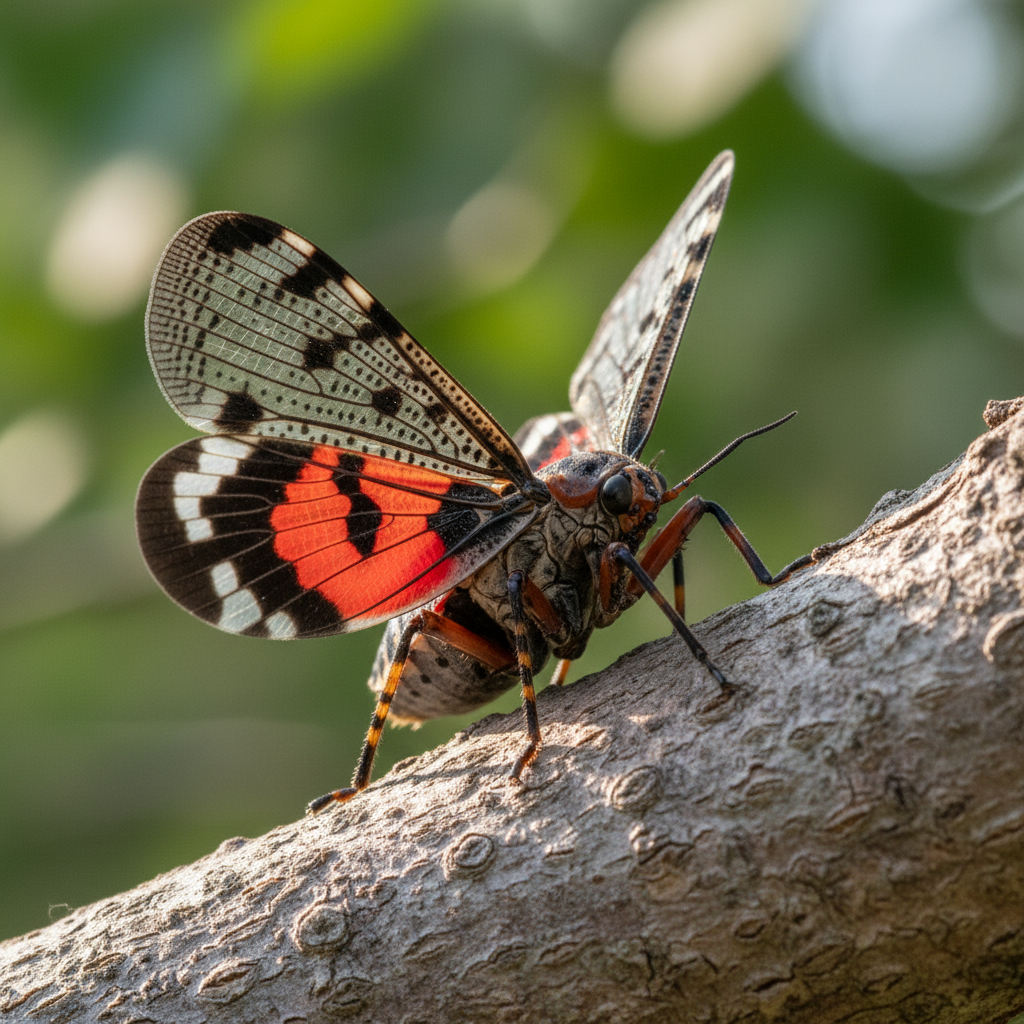
- Japanese beetles skeletonize leaves, while spotted lanternfly adults and nymphs have distinctive seasonal appearances.
Behavior and life cycle
- Many turf insects spend part of their life in soil, thatch, stems, or protected plant surfaces.
- Plant pests may have several generations or only a narrow treatment window each year.
- Stressed plants are often less able to tolerate feeding damage and may attract secondary problems.
- Natural enemies and weather can reduce some populations, so visible insects do not always justify broad treatment.
Why it shows up
- Overwatering, shallow irrigation, compaction, improper mowing, and excessive thatch weaken turf.
- Drought, heat, poor drainage, root injury, salt, or construction stress damages plants.
- Dense plantings, limited air movement, and susceptible plant varieties increase pest and disease pressure.
- Imported materials, nearby host plants, and invasive species contribute new activity.
Common mistakes
- Applying insecticide to every brown patch without finding insect evidence.
- Treating at the wrong life stage or outside the useful seasonal window.
- Using the entire parcel size instead of measuring the actual treatment area.
- Ignoring irrigation, mowing, drainage, soil, or plant-health conditions that continue causing damage.
When to call a professional
- Damage is spreading or the cause remains unclear after basic cultural corrections.
- Roots, valuable trees, ornamentals, or large lawn areas are affected.
- An invasive pest, egg mass, unusual insect, or regulated plant-health concern is suspected.
- A measured, documented pesticide application or seasonal monitoring plan is needed.
What Fantwin inspects and services
Pests and problems covered
- White grubs
- Chinch bugs
- Sod webworms
- Aphids
- Scale insects
- Japanese beetles
- Spotted lanternfly where applicable
Property types
- Residential lawns
- Ornamental beds
- Trees and shrubs
- Small commercial landscapes
Areas we inspect
- Affected lawn zones and root areas
- Tree trunks, branches, leaves, and undersides
- Ornamental beds and plant groupings
- Irrigation, drainage, compaction, mowing, and environmental stress conditions
What the service may include
- Inspection of affected turf or plants
- Pest and damage-pattern assessment
- Treatment-area measurement
- Targeted product recommendation when pest activity supports treatment
- Cultural and monitoring recommendations
Methods considered after inspection
- Targeted foliar application
- Granular treatment
- Soil or root-zone treatment when label-approved
- Spot treatment
- Monitoring
- Cultural-practice recommendations
Methods are selected from inspection findings, the contracted scope, treatment site, active license category, customer authorization, and product-label directions. Not every listed method is used on every job.
Health, property, and operational concerns
- Progressive turf thinning or plant decline
- Secondary weeds in damaged turf
- Misapplication when environmental stress is mistaken for a pest
- Seasonal reinfestation
Signs to document before the visit
- Turf that lifts easily from grub feeding
- Irregular thinning or discoloration
- Chewed, skeletonized, curled, or sticky foliage
- Visible insects, egg masses, webbing, scale, or frass
Why this problem develops locally
New Jersey landscapes experience humid summers, freeze-thaw cycles, varied soils, irrigation stress, invasive pests, and overlapping disease symptoms that require careful identification.
Timing and follow-up
Timing depends on pest life stage, plant condition, weather, treatment window, and label. Some pests can only be managed effectively during specific seasonal stages.
Follow-up may involve monitoring, a seasonal program, or a separate visit when pest development or plant response cannot be evaluated immediately.
Our service process
Review the damage history and site conditions
Inspect turf, roots, foliage, stems, and pest evidence
Distinguish likely biotic and abiotic causes
Measure and treat only the justified area
Document treatment timing and cultural actions
Before the appointment
- Tell us about occupants, pets, sensitivities, access limits, and any recent pesticide use.
- Keep the treatment area reasonably accessible so the technician can inspect before recommending service.
- Follow only the preparation instructions provided for your confirmed service; requirements vary by pest and treatment method.
After the appointment
- Review the digital service report, including products used, treated areas, and technician recommendations.
- Follow any product-specific precaution, ventilation, drying, or re-entry instructions provided after service.
- Complete sanitation, moisture, exclusion, or monitoring actions noted in the report because treatment alone may not correct the source.
Normally included when listed in the quote
- Inspection of contracted areas
- Pest-focused recommendation
- Authorized treatment
- Service record and cultural guidance
May require a separate quote or specialist
- Tree removal or pruning
- Irrigation repair
- Core aeration or landscaping labor
- Disease diagnosis requiring laboratory testing
- Fertilization unless specifically quoted
Important service expectations
Results depend on pest species, infestation level, access, sanitation, moisture, structural conditions, customer preparation, and completion of recommended follow-up.
No treatment can prevent every future pest from entering an open or conducive property.
Pesticides, when used, are selected for the inspected site and applied according to the product label.
Prevention and preparation tips
Avoid overwatering and repeated shallow irrigation
Mow at the appropriate height with sharp blades
Keep mulch away from trunks
Report spotted lanternfly or unusual pest activity
Do not treat brown turf until the cause is identified