
Wasp and Stinging Insect Control in New Jersey
Stinging-insect service evaluates the species, nest location, access risk, building entry point, and whether the activity is an exposed nest, ground nest, or concealed wall void.
Fast quote request
Your pest protection
- Choose your pest issue
- Add your contact information
- We confirm property details during follow-up
Species and nest location determine the safest response
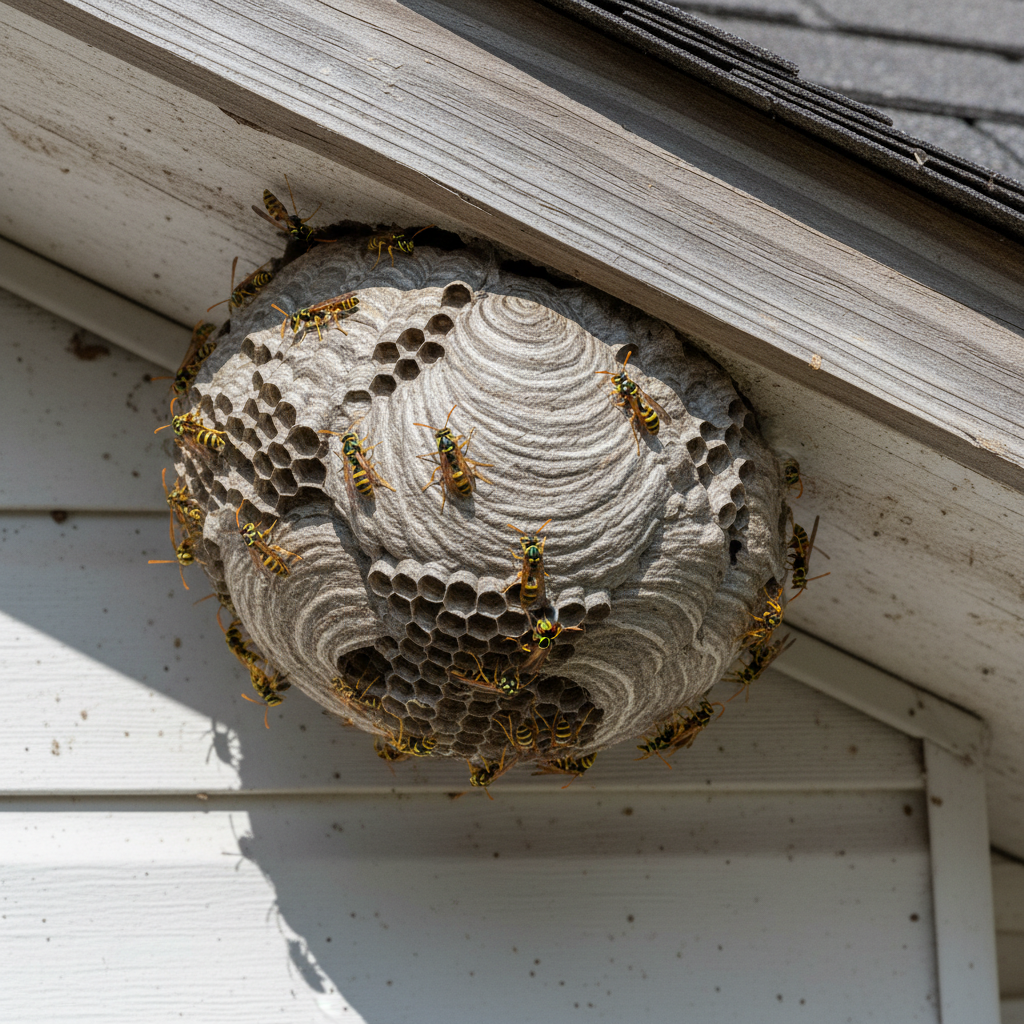
Paper wasps, yellowjackets, hornets, honeybees, and solitary bees differ in nesting behavior and defensive response. The most useful clues are the insect's body shape, flight pattern, nest structure, and exact entry point. An exposed paper nest is different from a colony hidden in a wall, attic, tree cavity, or underground opening.
Important clue
Repeated flight to one opening or visible nest
Higher-risk locations
Doorways, play areas, decks, ground holes, and wall voids
Do not do
Do not plug an active entry before the colony is resolved
Control principle
Identify, assess access, treat the nest or entry, then seal when appropriate
How to identify it
- Paper wasps have slender bodies and build open comb nests under eaves, railings, and sheltered structures.
- Yellowjackets are compact, strongly marked wasps that may nest underground or inside structural voids.
- Hornets may build enclosed paper nests in trees, shrubs, or structures and can strongly defend the area.
- Honeybees are generally hairier and may require beekeeper or specialist involvement rather than routine pest treatment.
Behavior and life cycle
- Social colonies become larger and more defensive as the season progresses.
- Workers repeatedly travel between food or water sources and the nest entrance.
- Closing an active wall opening can force insects into interior rooms.
- Some solitary bees nest individually and require a different assessment from social wasps.
Why it shows up
- Protected eaves, soffits, vents, wall gaps, sheds, decks, shrubs, and ground cavities offer nesting sites.
- Open trash, sugary drinks, outdoor dining, fallen fruit, and pet food attract foraging insects.
- Warm sheltered wall voids and rooflines support concealed nests.
- Repeated seasonal activity may use the same favorable structural areas even when the old colony does not survive winter.
Common mistakes
- Standing directly in the flight path or striking the nest.
- Plugging a wall or soffit opening while insects are still active.
- Treating an unknown bee or wasp without identifying whether relocation or specialist help is appropriate.
- Attempting ladder or roof work without safe access and protective equipment.
When to call a professional
- The nest is near an entrance, play area, deck, business doorway, or occupied room.
- Anyone nearby has a known sting allergy or has experienced a serious reaction.
- Activity enters a wall, ceiling, attic, chimney, vent, or underground opening.
- The nest is high, concealed, large, or cannot be approached safely.
What Fantwin inspects and services
Pests and problems covered
- Paper wasps
- Yellowjackets
- Hornets
- Other nuisance stinging insects within scope
Property types
- Homes
- Decks and sheds
- Retail entrances
- Outdoor dining areas
- Small commercial properties
Areas we inspect
- Eaves, soffits, rooflines, and vents
- Decks, sheds, play structures, and shrubs
- Ground openings
- Wall void entry points and utility gaps
What the service may include
- Safe-distance inspection and species assessment
- Nest-location and access evaluation
- Targeted treatment of the contracted nest or entry point
- Removal when accessible and appropriate
- Post-service activity and exclusion instructions
Methods considered after inspection
- Targeted nest treatment
- Dust or liquid application to an approved entry point
- Accessible nest removal
- Monitoring
- Entry sealing after activity has ceased
- Referral when specialty access is required
Methods are selected from inspection findings, the contracted scope, treatment site, active license category, customer authorization, and product-label directions. Not every listed method is used on every job.
Health, property, and operational concerns
- Painful stings
- Serious allergic reactions in sensitive individuals
- Aggressive defense near nests
- Indoor emergence from wall or ceiling voids
Signs to document before the visit
- Repeated traffic to one opening
- Visible paper or enclosed nest
- Ground-level flight into a hole
- Stinging insects appearing indoors near a wall void
Why this problem develops locally
Warm months, abundant nesting structures, landscaped yards, food waste, and outdoor dining create frequent seasonal stinging-insect activity across New Jersey.
Timing and follow-up
Treatment timing may be adjusted for species activity, weather, nest location, and safe access. Some residual activity can continue temporarily after a concealed nest is treated.
Follow-up may be required for concealed wall nests, multiple entry points, difficult access, or continued activity beyond the technician's expected period.
Our service process
Observe flight pattern and identify the likely species
Locate the nest or primary entry point
Evaluate occupants, allergies, access, and treatment risk
Treat the contracted site using an appropriate method
Explain expected activity and when sealing or follow-up should occur
Before the appointment
- Tell us about occupants, pets, sensitivities, access limits, and any recent pesticide use.
- Keep the treatment area reasonably accessible so the technician can inspect before recommending service.
- Follow only the preparation instructions provided for your confirmed service; requirements vary by pest and treatment method.
After the appointment
- Review the digital service report, including products used, treated areas, and technician recommendations.
- Follow any product-specific precaution, ventilation, drying, or re-entry instructions provided after service.
- Complete sanitation, moisture, exclusion, or monitoring actions noted in the report because treatment alone may not correct the source.
Normally included when listed in the quote
- Assessment of the reported nest
- Treatment of the quoted location
- Basic prevention recommendations
- Service documentation
May require a separate quote or specialist
- Opening walls or ceilings
- Roof repair
- Specialty lift or high-access work
- Honeybee relocation
- Treatment of additional undisclosed nests
Important service expectations
Results depend on pest species, infestation level, access, sanitation, moisture, structural conditions, customer preparation, and completion of recommended follow-up.
No treatment can prevent every future pest from entering an open or conducive property.
Pesticides, when used, are selected for the inspected site and applied according to the product label.
Prevention and preparation tips
Keep people and pets away from the flight path
Do not plug an active wall entry before treatment
Cover food and trash outdoors
Inspect eaves early in the season
Call emergency services for a severe sting reaction