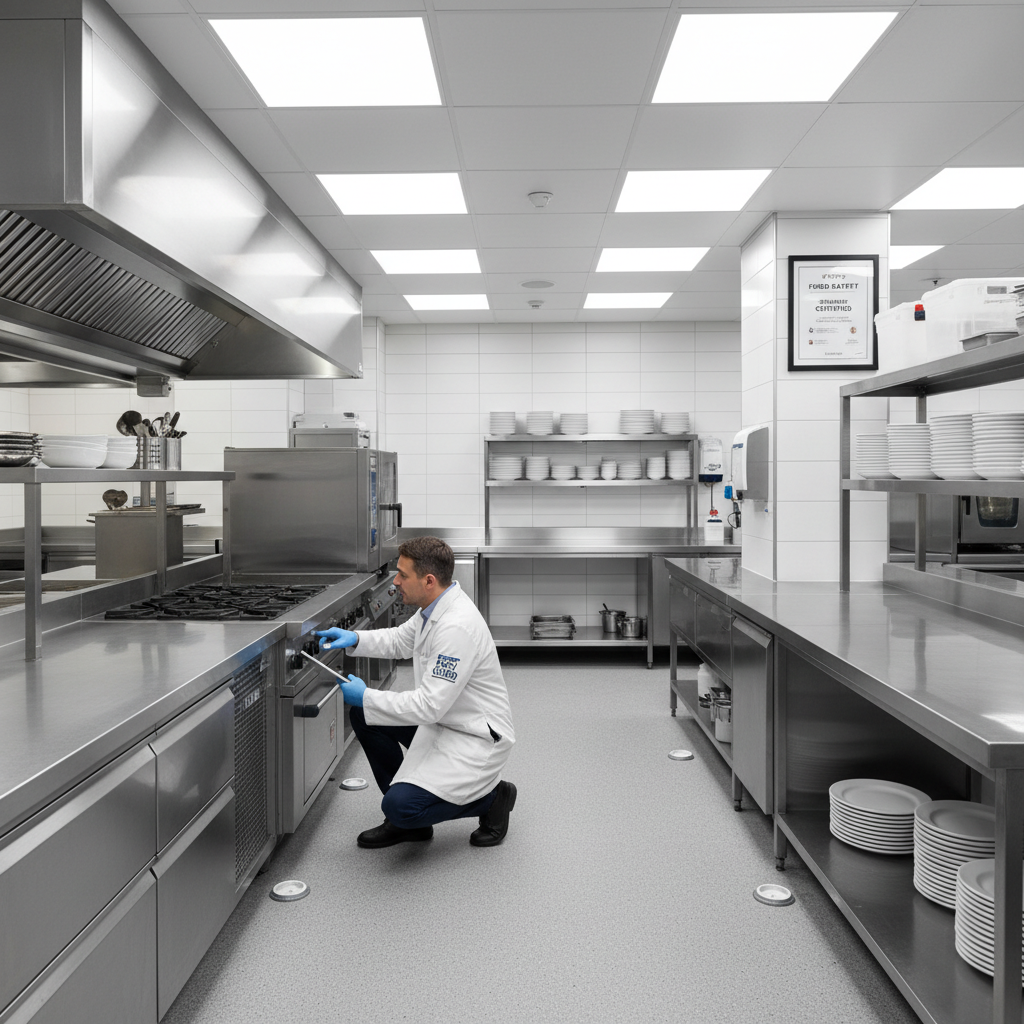
Marlton Pike (Route 70) mixes quick-service restaurants, medical offices, and retail. Shared dumpsters, delivery doors, and multi-tenant walls mean pest issues travel between suites if you only treat reactively.
Map risk zones before peak season
- Receiving doors and dock gaps
- Break rooms and shared trash rooms
- Exterior vegetation against the building
- Ceiling voids shared with neighboring tenants
The sanitation details that decide the outcome
On a commercial site the treatment is rarely the variable. What separates a kitchen that stays clean from one that keeps calling is a short list of housekeeping habits, and they are cheaper than service visits.
- Store product up off the floor and out from the wall, on racking rather than pallets pushed into a corner, so the perimeter can actually be inspected
- Break down and remove incoming cardboard the same day — corrugated cardboard is both a roach harborage and how roaches arrive in the first place
- Clean under and behind fixed equipment: fryer lines, the ice machine, soda gun holsters and drip trays, the reach-in compressor housing
- Treat the mop sink and mop storage as a pest issue, because standing gray water and a wet mop head are a small ecosystem
- Keep the dumpster lid closed, the pad clean and the corral as far from the receiving door as the site allows, and put the grease bin on the same schedule
Floor drains deserve their own line. The organic film that builds inside a drain and under its grate is the standard breeding site for drain flies, and no amount of surface cleaning reaches it. There is a free test any manager can run: after close, tape clear packing tape sticky-side-down across a suspect drain, leave it overnight, and look at the underside of the tape in the morning. Flies stuck to it tell you which drain is producing them, which is a far better answer than treating every drain in the building.
Documentation for inspections
Food businesses need service logs that stand up to health inspectors. Fantwin’s commercial program emphasizes scheduled visits, monitoring, and clear reports — aligned with Integrated Pest Management, not mystery sprays.
What an inspector actually opens is the corrective-action column. A log that records only visit dates and a product name demonstrates that someone came; a log that ties a numbered device on a site map to a finding, a corrective action and the person responsible demonstrates a program. Keep the site map, the device numbering, the trend across visits and the sign-off together in one binder or one file, and keep it where a manager can hand it over without going to look for it.
Multi-tenant buildings, and offices without a kitchen
In a strip or a shared office building, ceiling voids, wall chases and the shared trash room do not stop at your lease line, so treating one suite alone buys a temporary result and the pressure returns from next door. Where a neighboring tenant is the source, the useful move is to raise it with the landlord or property manager rather than with the tenant, because the common areas are theirs to schedule. Offices without a kitchen are not exempt either — break rooms, food kept in desk drawers, overwatered interior plants and an evening cleaning contract that empties bins but does not wipe surfaces are the four things that produce ant and small-fly complaints in an office suite.
Coordinate with nearby Voorhees and Cherry Hill accounts
Multi-location operators often run sites across Marlton, Voorhees, and Cherry Hill. We track those markets separately for performance while routing technicians efficiently across the corridor.
Request a commercial quote via our Marlton hub or call 908-844-8650. See also our commercial pest management page for program overview.